Most “tech gurus” will try to sell you on the latest, most expensive hardware or a suite of flashy apps that promise to revolutionize your life. It’s a racket. I’ve spent two decades in corporate operations, and if there is one thing I’ve learned, it’s that complexity is usually just a mask for inefficiency. You don’t need a new device; you need to stop letting your current one dictate your schedule. Most of the smartphone tips and tricks you see cluttering your feed are nothing more than digital noise designed to keep you scrolling. I’m not interested in the hype, and frankly, neither should you be.
My goal here is simple: I want to help you reclaim your mental bandwidth. I’m going to skip the fluff and the “revolutionary” nonsense to give you a handful of practical, battle-tested adjustments that actually work. We are going to focus on stripping away the digital friction that eats your time through meaningful automation and ruthless decluttering. This isn’t about mastering a gadget; it’s about making your technology serve you, rather than the other way around. Let’s get to work.
Table of Contents
Master Android Productivity Shortcuts for Faster Workflows
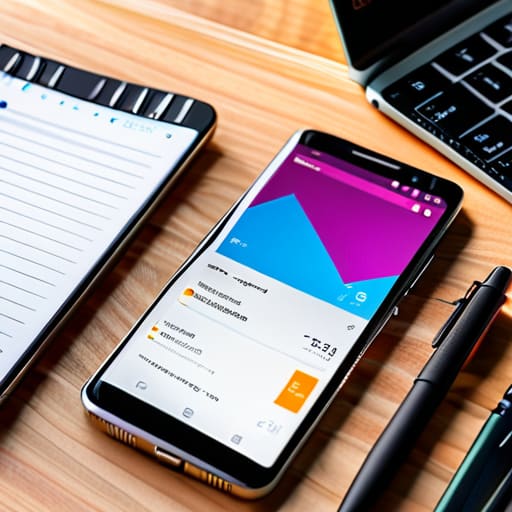
If you’re still navigating your phone like it’s a toy rather than a tool, you’re leaking time. For those of us running businesses or managing complex schedules, every extra tap is a micro-friction that adds up. I’ve found that mastering specific android productivity shortcuts is the fastest way to turn a distraction machine into a high-performance workstation. Start by leveraging “Split Screen” mode for multitasking; being able to reference a spreadsheet while drafting an email in a separate window changes the game. It’s not about doing more; it’s about reducing the mental overhead of switching between apps.
Beyond basic multitasking, you need to look at how your apps talk to each other. I highly recommend setting up useful mobile app integrations through services like Tasker or even simple Google Assistant routines. For example, you can automate a “Work Mode” that silences non-essential notifications and opens your calendar and project management app with a single voice command. This isn’t just about convenience; it’s about mobile device performance optimization for your brain. By automating these transitions, you stop reacting to your phone and start directing it. Stop fighting the interface and start making it work for you.
Unlock Ios Hidden Settings to Reduce Digital Friction
If you’re running an iPhone, you’re likely surrounded by a walled garden that’s designed to be intuitive, but often, that very ease of use leads to mindless scrolling and notification fatigue. To truly reduce friction, you need to dig into the iOS hidden settings that most people ignore. Start with the Focus modes. Don’t just use them for “Sleep” or “Work”; customize them to filter out every single app that doesn’t serve your immediate objective. If you’re in deep-work mode, your phone shouldn’t be chirping about a social media like or a non-urgent email.
Next, look at your background processes. A major culprit in draining your juice is a litany of apps constantly refreshing in the background. Go into your settings and aggressively prune which apps have permission to do this. It’s one of the simplest ways to optimize mobile battery life without carrying a power bank everywhere you go. I also recommend setting up “Back Tap” under Accessibility. You can map a double or triple tap on the back of your phone to trigger specific actions, like turning on the flashlight or taking a screenshot. It sounds like a gimmick, but once you integrate it into your muscle memory, you’ll realize how much unnecessary screen-tapping you were doing before.
Cut the Noise: 5 Ways to Reclaim Your Focus
- Silence the non-essentials. Go into your notification settings and strip everything down to just human beings. If it’s an app trying to sell you something or a news alert, it doesn’t deserve to buzz in your pocket.
- Use Focus Modes to create digital boundaries. Set your phone to automatically enter “Work” or “Personal” modes based on your location or time of day. It stops the mid-afternoon Slack ping from ruining your dinner.
- Audit your home screen. If you have more than two rows of apps, you’re spending too much time hunting and not enough time doing. Move everything else to the App Library and keep only your essential tools front and center.
- Master the “Search” function. Stop scrolling through folders like it’s 2012. Whether it’s Spotlight on iPhone or the Search bar on Android, swipe down and type the name of the app or contact immediately. It’s faster and less distracting.
- Automate your routine tasks with Shortcuts or Routines. If you find yourself doing the same three things every morning—like checking the weather, your calendar, and the news—build a single automation to do it all with one tap.
The Philosophy of Utility
Your smartphone should be a tool that serves you, not a digital leash that demands your constant attention. If you aren’t using automation to strip away the friction, you aren’t mastering your device—it’s mastering you.
Marcus Holloway
Reclaiming Your Digital Space
We’ve covered a lot of ground, from mastering Android’s deep-level shortcuts to stripping away the unnecessary noise in your iOS settings. The goal here wasn’t to turn you into a tech expert, but to help you stop fighting your device and start making it work for you. By implementing these small, tactical changes, you’ve effectively removed layers of digital friction that used to drain your focus. Whether it’s automating a repetitive workflow or silencing a notification that serves no purpose, the objective remains the same: minimizing the mundane so your phone becomes a tool rather than a distraction.
At the end of the day, your smartphone should be an extension of your intent, not a vacuum for your attention. I spent years in the corporate grind thinking more technology meant more progress, but I was wrong; true efficiency is about intentionality. Use these tips to build a digital environment that respects your time and mental bandwidth. Once you’ve automated the busywork and pruned the clutter, you’ll find you have more room for the things that actually move the needle—and more time to step away from the screen entirely. Now, go put these settings to work and get back to what matters.
Frequently Asked Questions
I’ve set up these shortcuts, but will they significantly impact my battery life?
The short answer is no. In fact, it’s often the opposite. Most of these automations are designed to reduce “screen time friction”—meaning you spend less time hunting through menus and toggling settings manually. Every time you stop scrolling aimlessly to find a setting, you’re saving battery. Think of it like tuning a vintage synth; a little bit of precision work upfront makes the whole system run much smoother and more efficiently in the long run.
Are there specific automation tools that work seamlessly across both Android and iOS if I use multiple devices?
If you’re juggling both ecosystems, stop looking for OS-specific hacks and start looking at the cloud. I rely on IFTTT or Zapier to bridge the gap; they act as the connective tissue between disparate devices. For task management, Todoist is my go-to—it syncs flawlessly regardless of the hardware. The goal isn’t to master one system, but to build a workflow that doesn’t care which phone is in your pocket. Keep it platform-agnostic.
How do I know which notifications are actually worth keeping on, and which ones are just digital noise?
Ask yourself one question: Does this notification require an immediate decision or action? If it’s just a “like” on a photo or a promotional ping from a retailer, it’s noise. Kill it. I only keep alerts for things that impact my schedule or my wallet in real-time. If you aren’t reacting to the buzz within sixty seconds, it shouldn’t be allowed to interrupt your focus. Audit your settings once a week. Be ruthless.
What’s the best way to audit my current phone usage to see where I'm actually losing time?
Don’t rely on your gut; your brain is a terrible accountant. Open your Screen Time (iOS) or Digital Wellbeing (Android) settings immediately. Look past the total hours and find the “pickups.” If you’re grabbing your phone sixty times a day just to check a single app, you don’t have a usage problem—you have a friction problem. Identify those specific loops, then kill the notifications driving them. Audit the data, not your feelings.