I was sitting in my workshop last Tuesday, mid-way through cleaning the oxidation off a 1978 Moog circuit board, when a “breaking news” alert pinged on my phone. It was one of those sensationalist, high-octane headlines designed to trigger an immediate cortisol spike. I felt that familiar itch to react, to share, to argue—but then I caught myself. We’ve been sold this idea that you need a degree in media studies or a complex suite of expensive fact-checking software to navigate the digital noise, but that’s a lie. Learning how to spot fake news isn’t about academic theory; it’s about building a mental filter that keeps the garbage from cluttering your headspace.
I’m not here to give you a lecture or a list of academic sources that will take you three hours to parse. I know you’re busy, and you don’t have the bandwidth for fluff. Instead, I’m going to give you a streamlined, high-utility framework based on the same pattern recognition I use in operations consulting. I’ll show you how to identify the red flags in seconds so you can stop wasting your precious mental energy on lies and get back to what actually matters.
Table of Contents
Mastering Essential Media Literacy Skills
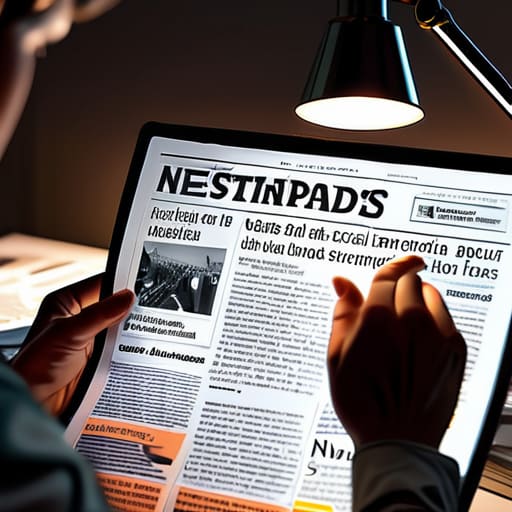
To cut through the noise, you don’t need a degree in journalism; you need a repeatable system. I view media literacy skills much like an operational workflow: if you don’t have a standard operating procedure, you’re just reacting to chaos. The first step is a rigorous source credibility assessment. Before you let a headline live rent-free in your head, look at the architect behind it. Is this a reputable news organization with a history of corrections, or is it a domain name that looks like it was generated by a bot in a basement? If the “About Us” section is vague or non-existent, trust your gut and move on.
Once you’ve vetted the source, you have to look at the mechanics of the content itself. This means detecting biased reporting by looking for loaded language designed to trigger an emotional response rather than an intellectual one. If an article is trying to make you angry before it even presents a fact, it’s likely manipulating you. I keep a small list of trusted fact-checking websites bookmarked on my browser—not to do the thinking for me, but to act as a quick sanity check when a story feels too wild to be true. Treat your attention like a finite resource; don’t spend it on junk.
Automating Your Source Credibility Assessment

You don’t need to spend your entire afternoon playing detective every time a headline hits your feed. That’s a recipe for burnout. Instead, I view a source credibility assessment as a process that should be as streamlined as a well-oiled machine. Start by curating your digital environment. Use browser extensions or RSS aggregators that prioritize established, high-integrity outlets. If you find yourself constantly fighting a tide of misinformation, it’s time to audit your follows. Unsubscribe from the loud, reactionary accounts and replace them with sources that prioritize substance over sensation.
The next step is to leverage existing tools to do the heavy lifting for you. I don’t manually verify every single claim; I rely on a vetted shortlist of fact checking websites like Snopes or PolitiFact. Set these as your default tabs when a story feels “off.” By building a repeatable workflow—check the source, run a quick search on a verification site, and cross-reference the primary data—you turn a chaotic mental task into a standard operating procedure. This isn’t about being cynical; it’s about protecting your mental bandwidth so you can focus on work that actually moves the needle.
Five Low-Friction Tactics to Filter the Noise
- Check the URL before you click. If it’s a slightly off-brand version of a major news site—like “.co” instead of “.com”—it’s a red flag. Don’t let a typo-squatting site hijack your attention.
- Read past the headline. Most fake news is engineered to trigger an emotional response through clickbait. If the headline makes you angry or terrified, stop. Read the actual body of the text to see if the facts actually support the drama.
- Reverse-image search the visuals. Misinformation often uses old photos from different contexts to manufacture a crisis. A quick right-click and “Search image with Google” will tell you if that “breaking news” photo is actually from a protest three years ago.
- Verify with a second, independent source. If a story is truly massive, multiple reputable outlets will be covering it. If it only exists on one obscure blog and a handful of social media accounts, it’s likely junk.
- Look for the “About Us” section. Legitimate organizations are transparent about their leadership, funding, and mission. If a site hides its identity or lacks a clear editorial standard, treat everything it publishes as unverified.
The Cost of Unchecked Information
“In an era of infinite noise, your attention is your most valuable asset. Every minute you spend chasing a lie is a minute you’ve stolen from your own productivity and peace of mind. Stop being a passive consumer and start being a gatekeeper.”
Marcus Holloway
Cutting Through the Noise

At the end of the day, spotting misinformation isn’t about becoming a professional investigator; it’s about building a reliable system of checks and balances. We’ve covered how to sharpen your media literacy, how to verify sources before you let them occupy your mental space, and how to use basic automation to filter out the junk. The goal is to move away from reactive, emotional consumption and toward a more disciplined, analytical approach to your information diet. If you implement even half of these frameworks, you’ll find that you aren’t just avoiding lies—you are actively reclaiming your cognitive bandwidth from the people who profit from your outrage.
I know it feels like an uphill battle in an era designed to keep us distracted and divided, but don’t let the chaos overwhelm you. Information should be a tool for your growth, not a weight around your neck. Treat your attention like your most valuable asset—because it is. When you stop feeding the trolls and start prioritizing verified utility over viral sensationalism, you regain control over your own perspective. Now, close the browser tab, put down the phone, and go focus on something that actually deserves your time. Stay sharp.
Frequently Asked Questions
How do I quickly verify a breaking news story before it goes viral and wastes my time?
When a story breaks, your instinct is to react. Don’t. Instead, use the “Three-Source Rule.” Before you share or even dwell on it, find three independent, reputable outlets reporting the same facts. If it’s only on social media or a single obscure site, it’s likely noise. Check the “About Us” section of the source and run a quick reverse image search on any shocking visuals. If it doesn’t pass that 60-second audit, ignore it.
Can I use specific browser extensions or tools to automate this process without adding more digital clutter?
The short answer is yes, but don’t turn your browser into a graveyard of unused plugins. I prefer a lean setup. Use something like NewsGuard to get quick credibility ratings, or a simple ad-blocker to strip away the rage-baiting pop-ups that cloud your judgment. If a tool doesn’t save you at least ten minutes of mental processing a day, delete it. Keep your digital workspace clean; clutter is just another form of friction.
How do I spot misinformation in video or audio formats, like deepfakes, which are getting harder to catch?
Deepfakes are getting better, but they still leave digital fingerprints. Don’t trust your eyes alone; look for “glitches” in the physics. Watch for unnatural blinking, blurring around the mouth during speech, or lighting that doesn’t match the background. For audio, listen for a lack of breathing or rhythmic inconsistencies. If a clip feels designed to trigger an immediate emotional reaction, treat it as suspect. Verify the source before you let it occupy your mental bandwidth.
What’s the most efficient way to deal with "rage-bait" content that's designed to hijack my attention?
The most efficient way to handle rage-bait is to recognize the physiological trigger: if a headline makes your blood boil, it’s working. That’s not information; it’s a hijack. My rule is simple: don’t engage. Don’t comment, don’t share, and don’t even linger. Engagement feeds the algorithm, which just serves you more poison. Recognize the spike in cortisol, close the tab, and get back to something that actually builds your life.