I was sitting at my workbench last Tuesday, trying to recalibrate the oscillators on a 1970s Moog, when my phone buzzed for the tenth time in twenty minutes. It wasn’t an emergency; it was just the digital equivalent of someone tapping me on the shoulder every thirty seconds to ask if I’d seen a meme. Most productivity gurus will tell you that you need a $500 standing desk or a complex “deep work” ritual involving specific lighting and expensive apps to master how to avoid distractions. Honestly? That’s just more noise. They’re selling you complexity when what you actually need is a way to shut the door on the chaos.
I’m not here to sell you a subscription to a new habit-tracking app or a complicated system that requires more maintenance than the actual work you’re trying to do. My approach is much simpler: we are going to look at how to automate your environment and strip away the friction that pulls you off course. I’ll share the practical, battle-tested methods I use to protect my own mental bandwidth, focusing on utility over hype. Let’s stop managing the interruptions and start eliminating them.
Table of Contents
Managing Digital Interruptions Before They Manage You

The constant ping of a smartphone isn’t just a nuisance; it’s a direct assault on your ability to think. Most people treat notifications like minor inconveniences, but they are actually micro-fractures in your attention span. If you want to master managing digital interruptions, you have to stop playing defense. I stopped trying to “resist” the urge to check my phone and started redesigning my environment so the phone wasn’t an option in the first place. This means aggressive notification management: if it isn’t a human being calling you with an emergency, it doesn’t deserve a buzz in your pocket.
Once you’ve silenced the noise, you need to address your cognitive load management. Every time you glance at a Slack message or an email alert, your brain incurs a “switching cost”—a mental tax that makes it harder to return to the task at hand. I treat my focus like a finite resource, much like the electricity needed to power my vintage synths. You wouldn’t leave every light in the house on while trying to record a single track; don’t leave every digital tab open while trying to solve a complex problem. Close the loops, silence the pings, and reclaim your mental bandwidth.
Productivity Hacks for Focus in a Loud World
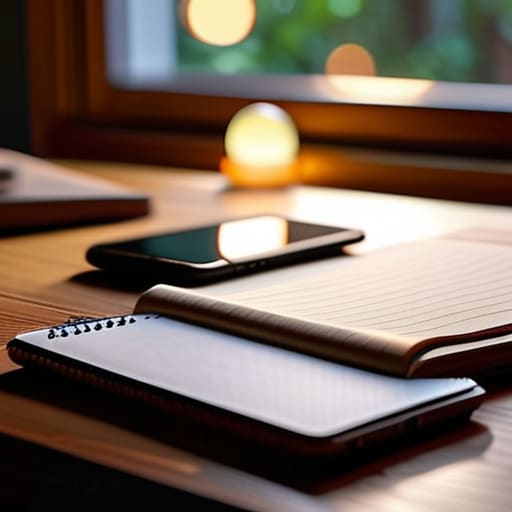
If you want to actually get things done, you have to stop treating your attention like an infinite resource. It isn’t. Every time you glance at a notification or respond to a “quick” Slack message, you’re paying a tax on your brainpower. To combat this, I rely heavily on deep work techniques—specifically, scheduling non-negotiable blocks of time where the world is effectively muted. This isn’t about working harder; it’s about protecting your cognitive capacity from the constant drip of trivialities that erode your ability to think clearly.
I’ve found that the most effective way to implement these productivity hacks for focus is to build a physical perimeter around your workspace. If you’re in an office, invest in high-quality noise-canceling headphones; if you’re at home, use a visual cue—like a closed door or even a specific lamp—to signal to yourself (and anyone else) that you are “off-grid.” This isn’t just about eliminating workplace distractions; it’s about practicing intentional cognitive load management. By reducing the number of micro-decisions you have to make throughout the hour, you free up the mental bandwidth required to tackle the complex problems that actually move the needle in your career.
The Frictionless Focus Toolkit
- Audit your notification settings once a week. If an app isn’t essential to your immediate workflow, it doesn’t deserve to buzz in your pocket. Turn off everything except human-to-human communication.
- Use the “Single-Tasking” rule. Multitasking is a myth that just increases your error rate. Pick one objective, clear your desk of everything else, and stay on that one track until it’s done.
- Create a physical signal for deep work. Whether it’s wearing noise-canceling headphones or closing your office door, you need a ritual that tells your brain—and the people around you—that you are officially off the grid.
- Schedule your “reactive” time. Don’t let emails dictate your morning. Set specific blocks in your calendar for checking messages and responding to requests, so you aren’t constantly pivoting between creation and reaction.
- Prepare your environment the night before. A cluttered workspace is a visual distraction that drains your mental bandwidth. Clear your desk and write down your top three priorities before you sign off for the day.
The Cost of Context Switching
“Distraction isn’t just a momentary lapse in attention; it’s a tax on your cognitive bandwidth. Every time you ‘just check’ a notification, you’re paying a high interest rate on your focus that you can’t afford to settle.”
Marcus Holloway
Cutting Through the Noise

At the end of the day, avoiding distractions isn’t about finding a magical app or a perfect new gadget; it’s about intentionality. We’ve looked at how to tighten your digital perimeter, manage your physical environment, and implement systems that do the heavy lifting for you. Whether it’s silencing the relentless ping of notifications or carving out dedicated deep-work blocks, the goal remains the same: to reduce friction. You can’t stop the world from being loud, but you can absolutely build a fortress around your focus so that the chaos stays on the other side of the wall.
I’ve spent enough years in high-pressure corporate environments to know that time is the only resource we can’t manufacture more of. Every minute you spend reacting to a trivial interruption is a minute stolen from your actual life and your most meaningful work. Don’t let the small stuff dictate your trajectory. Start small—pick one system we discussed and automate it today. Reclaim your attention, protect your mental bandwidth, and start spending your time on the things that actually move the needle. Let’s get to work.
Frequently Asked Questions
How do I stay focused when my job requires me to be constantly responsive to emails and Slack?
The “always-on” expectation is a trap. If you treat every Slack ping like a fire alarm, you’ll never build anything of substance. Stop reacting and start batching. Set specific windows—say, thirty minutes every two hours—to clear your inbox and messages. Outside of those windows, close the apps. Use status updates to signal you’re in deep work. You aren’t being rude; you’re being professional by prioritizing actual results over instant replies.
Is it actually possible to completely disconnect from my devices without falling behind on my work?
Yes, it’s possible, but you have to stop treating “availability” as a proxy for “productivity.” If you’re constantly reacting to pings, you aren’t working; you’re just processing noise. The trick isn’t to vanish entirely—it’s to build systems that work while you’re offline. Set clear communication windows, automate your status updates, and teach people how to reach you in a true emergency. Disconnect to do the deep work; reconnect to manage the fallout.
How can I rebuild my attention span if I've spent years getting used to constant digital stimulation?
You can’t just flip a switch and expect your brain to behave. You’ve trained your dopamine receptors to crave the ping, so you have to retrain them through deliberate friction. Start small: pick one task a day and do it without a single tab open or a phone in sight. Use a physical timer—something analog—to create a boundary. It’ll feel uncomfortable at first. That discomfort is just your attention span rebuilding itself.
What do I do when my physical environment—like a noisy office or a busy home—is the main source of the distraction?
If you can’t change the room, change your relationship to it. I’ve learned that fighting a noisy environment is a losing battle; you have to bypass it. Invest in high-quality noise-canceling headphones—think of them as a physical barrier for your brain. If that’s not enough, use “environmental cues.” A specific desk lamp or a particular scent can signal to your subconscious that it’s time to lock in, regardless of the chaos surrounding you.