I remember sitting at my desk five years ago, staring at a stack of invoices for a vintage Moog synthesizer repair that I simply couldn’t afford on short notice. It wasn’t that I lacked the money; it was that my money was scattered. I was caught in that exhausting cycle of “emergency” spending where every predictable expense—car tires, annual insurance, even holiday gifts—feels like a sudden crisis. Most financial gurus will try to sell you a complex, multi-layered budgeting system that requires a PhD to navigate, but they’re missing the point. Learning how to set up sinking funds isn’t about mastering complex math; it’s about building a system that stops the bleeding before it starts.
I’m not here to give you a lecture on austerity or a hundred-page spreadsheet template. My goal is to show you how to build a low-friction framework that handles your future expenses in the background, so you can stop reacting to life and start living it. I’ll walk you through the exact, no-nonsense process I use to categorize my costs and automate the transfers. We’re going to cut through the fluff and get your money working on autopilot, so you can focus your mental bandwidth on things that actually matter.
Table of Contents
Budgeting for Irregular Expenses Without the Stress

The biggest mistake I see people make is treating every unexpected cost like a personal failure. You get a car repair bill or an annual insurance premium, and suddenly your entire monthly budget is in shambles. That’s not a crisis; it’s just poor planning. When you are budgeting for irregular expenses, you have to stop viewing them as “surprises” and start viewing them as predictable obligations that just happen to arrive at odd intervals.
To get this right, you need to distinguish between your safety net and your planned spending. This is the core difference in the sinking fund vs emergency fund debate. An emergency fund is for the “oh no” moments—job loss or a medical catastrophe. A sinking fund is for the “I knew this was coming” moments—Christmas, home maintenance, or new tires. One is for survival; the other is for sanity.
I recommend keeping these funds in a separate high yield savings account to ensure your money is actually working for you while it sits there. Don’t let these small pools of capital get swallowed up by your primary checking account. By carving out specific amounts for these inevitable costs, you turn a potential financial headache into a simple, automated transaction.
Sinking Fund vs Emergency Fund Knowing the Difference
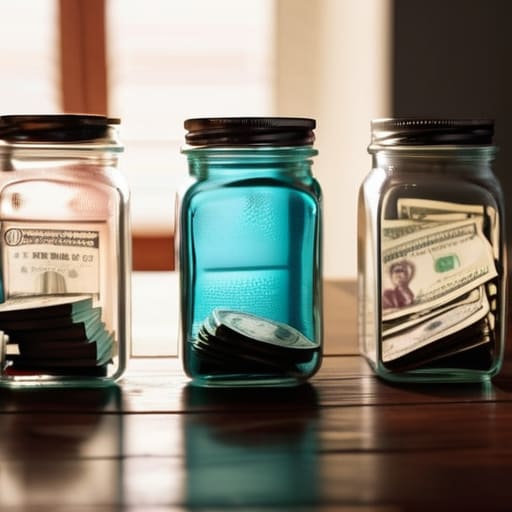
People often conflate these two, and that is a mistake that leads to financial friction. Think of your emergency fund as your “break glass in case of disaster” fund. It is for the things you cannot predict: a sudden job loss, a medical crisis, or a major plumbing catastrophe. You don’t touch this money for anything else. On the other hand, a sinking fund is for the things you know are coming. It’s for the predictable, irregular expenses that usually derail a budget, like annual car registration, holiday gifts, or a new laptop.
The core difference in the sinking fund vs emergency fund debate comes down to intention. An emergency fund is your safety net; a sinking fund is your pre-payment strategy. When you use a sinking fund for something like a vacation or home maintenance, you aren’t “dipping into savings”—you are simply executing a plan you built months in advance.
To keep things clean, I recommend using a high yield savings account for sinking funds. It keeps that cash separate from your daily spending money and allows it to earn a little something while it sits there. By separating these two buckets, you ensure that a planned expense like a new set of tires doesn’t feel like a personal financial failure.
Five Steps to Make Your Money Work While You Sleep
- Audit your calendar, not just your bank statement. Look back at the last twelve months to identify the “surprise” expenses that actually weren’t surprises—car registrations, annual subscriptions, or holiday gifts. If it happens once a year, it’s a sinking fund candidate.
- Give every fund a specific name. Don’t just move money into a generic savings bucket; label it “New Tires” or “Annual Insurance.” When the money has a job, you’re much less likely to dip into it for a random impulse purchase.
- Automate the transfer so you don’t have to think about it. Set up a recurring monthly transfer from your checking to your dedicated savings accounts. If you have to manually move the money every month, you’ll eventually forget, and the system will fail.
- Keep your high-yield savings accounts (HYSA) organized. You don’t need twenty different bank accounts, but you do want to use a bank that allows for multiple sub-accounts or “buckets” under one roof. It keeps the friction low and the interest high.
- Don’t overcomplicate the math. If you need $1,200 for Christmas and it’s January, just set aside $100 a month. It doesn’t need to be a complex spreadsheet; it just needs to be a consistent, predictable number that fits your cash flow.
The Philosophy of Frictionless Finance
“An emergency fund is for when life hits you hard; a sinking fund is for when life simply happens. Stop treating predictable expenses like surprises and start building the systems that handle them before they even reach your desk.”
Marcus Holloway
Cutting the Financial Friction

At its core, setting up sinking funds isn’t about complex math or obsessive tracking; it’s about eliminating the surprise factor from your life. We’ve covered how to distinguish these from your emergency fund, how to categorize your irregular expenses, and the importance of automating the transfers so you don’t have to rely on willpower. By carving out small, intentional amounts for things like car repairs, annual subscriptions, or holiday gifts, you stop reacting to your bank balance and start controlling your cash flow. Once the systems are in place, the mental heavy lifting is done.
I spent years in the corporate world watching people burn out because they were constantly playing defense against their own lives. Financial stress is often just a symptom of poor systems, not a lack of income. When you implement these funds, you aren’t just saving money; you are buying back your peace of mind. Stop letting the “unexpected” derail your progress. Set up your accounts, automate the process, and then get back to the things that actually matter. Life is too short to spend it worrying about next month’s registration fees.
Frequently Asked Questions
How much should I actually be putting into these funds every month to see a real difference?
There’s no magic number, but there is a math equation. Look at your upcoming irregular expenses—car registration, holiday gifts, annual insurance—and add them up for the year. Divide that total by twelve. That’s your baseline. If that number feels too heavy for your current cash flow, you have two choices: trim the non-essentials or adjust your expectations for the fund’s target. Don’t guess; do the math and automate the transfer.
Should I keep all my sinking funds in one big savings account or open separate ones for each category?
Keep it simple: if your bank allows “buckets” or sub-accounts within a single high-yield savings account, go that route. It’s the cleanest way to track your progress without the friction of managing five different logins. However, if your bank makes you open a brand-new account for every category, don’t do it. That’s just unnecessary administrative clutter. Pick three or four major categories, group them, and keep the rest in one central pot.
What happens if I overfund one category but fall short in another?
Don’t sweat it. Life isn’t a perfectly balanced ledger, and your sinking funds shouldn’t be either. If you overfund your “Travel” bucket but come up short on “Car Maintenance,” just shift the excess. Think of it as internal reallocation. You aren’t breaking the system; you’re just adjusting for reality. The goal is utility, not perfection. Move the surplus where it’s needed most and keep moving.
Is it worth the mental effort to track small funds like "car maintenance" versus just lump-summing them?
Don’t lump them together. If you dump everything into one giant “miscellaneous” pile, you lose visibility. You’ll look at your balance, see a decent cushion, and think you’re fine—right until your transmission dies and you realize that “cushion” was actually earmarked for next month’s property taxes.