I spent two decades in corporate operations, where I learned one brutal truth: most people don’t lack intelligence, they lack effective systems. We are currently drowning in a sea of information, yet we feel less capable than ever because we spend more time scrolling through “educational” content than actually absorbing it. Most people treat self-improvement like a hobby rather than an operational process, which is why they fail. If you want to actually move the needle on your skill set, you have to stop treating your brain like a junk drawer and start using the best apps for learning that actually respect your limited mental bandwidth.
I’m not here to give you a list of flashy, high-priced distractions that just make you feel productive while you’re actually wasting time. Instead, I’ve curated eight specific tools that prioritize high-utility output and efficient retention. These are the platforms I use to cut through the noise and ensure that every minute I spend studying actually translates into a tangible new capability. By the end of this list, you’ll have a streamlined toolkit designed to automate the friction of acquisition so you can get back to the work that actually matters.
Table of Contents
- Master the Fundamentals with Duolingo
- Deep Dives via Coursera
- Skill Building on Skillshare
- Knowledge on Demand with Brilliant
- The Library in Your Pocket with Libby
- Flashcard Efficiency with Anki
- Coding Logic via Mimo
- Curated Intelligence with Medium
- The Utility of Knowledge
- Cutting Through the Noise
- Frequently Asked Questions
Master the Fundamentals with Duolingo
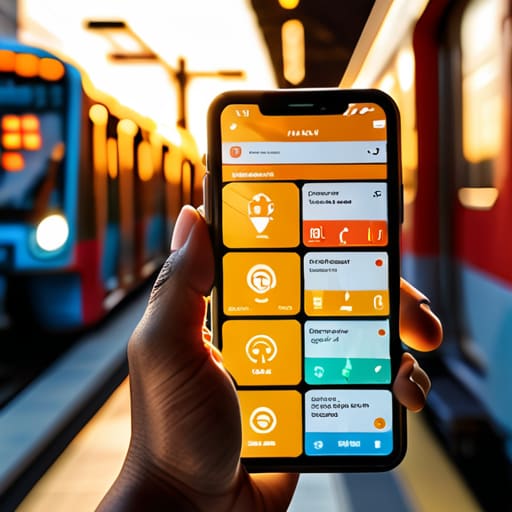
I’ve always believed that if you can’t find fifteen minutes a day to sharpen a skill, you aren’t actually trying to learn. Duolingo is the perfect tool for those pockets of dead time—waiting for a coffee or sitting on a train. It gamifies the process so effectively that you almost forget you’re working, which is a clever way to bypass the mental resistance most of us feel toward new subjects.
Deep Dives via Coursera

When you need to move past the surface level and actually acquire a professional competency, you need something with more weight. Coursera is where I go when I want to understand the mechanics of a new industry. They partner with actual universities and corporations, meaning the curriculum isn’t just fluff; it’s structured, academic, and rigorous.
Skill Building on Skillshare

Sometimes, the most valuable skills aren’t found in a textbook or a lecture hall. I’m talking about the creative and technical skills—video editing, graphic design, or even specialized cooking techniques. Skillshare operates on a model of practical application. You aren’t just listening to a professor; you’re watching a practitioner do the work in real-time.
Knowledge on Demand with Brilliant
If you’re the type of person who likes to understand the “why” behind the math or the science, Brilliant is your best bet. It moves away from rote memorization and focuses on active problem-solving. It forces you to engage with the logic of a concept, which is the only way to ensure the information actually sticks in your long-term memory.
The Library in Your Pocket with Libby
We live in an era of information overload, but we often neglect the most fundamental source of structured thought: the book. Libby allows you to borrow ebooks and audiobooks from your local library for free. It’s a low-friction way to integrate heavy reading into a lifestyle that is increasingly driven by short-form video and snippets.
Flashcard Efficiency with Anki
If you are studying something high-stakes—like medical terminology or a complex coding language—you need to understand Spaced Repetition Systems (SRS). Anki is the gold standard here. It’s not the prettiest app, and it’s certainly not “fun,” but it is incredibly effective at moving information from short-term to long-term memory.
Coding Logic via Mimo
The barrier to entry for programming can feel insurmountable if you try to dive straight into heavy documentation. Mimo breaks coding down into bite-sized, manageable chunks. It feels less like a grueling bootcamp and more like a series of logical puzzles that you solve as you go.
Curated Intelligence with Medium
Sometimes, you don’t need a full course; you just need a better perspective. Medium is a platform where experts and practitioners share their lived experiences and deep-dive essays. It’s a way to stay updated on industry trends and mental models without the noise of traditional social media.
The Utility of Knowledge
“Stop collecting apps like they’re digital trophies. A tool is only as good as the time it saves you; if an app doesn’t bridge the gap between curiosity and competence without adding more noise to your day, it’s just another distraction.”
Marcus Holloway
Cutting Through the Noise
At the end of the day, the goal isn’t to collect a dozen new icons on your home screen; it’s about finding the specific tools that actually move the needle for you. Whether you’re leveraging spaced repetition to master a new language or using high-level curation to stay ahead in your industry, the objective remains the same: reducing the friction between curiosity and competence. I’ve spent enough time in corporate environments to know that information overload is a silent productivity killer. Don’t fall into the trap of “productive procrastination” by downloading every tool on this list. Pick one or two that align with your current bottleneck and actually use them until they become part of your natural workflow.
Technology should serve your growth, not become another chore on your to-do list. We live in an era where the barrier to entry for any new skill has never been lower, but the cost of distraction has never been higher. My advice? Use these apps to automate the rote memorization and the organizational heavy lifting, then use that reclaimed mental bandwidth to do the real work—the deep, creative thinking that no algorithm can replicate. Stop searching for the perfect system and start building your own momentum. The tools are ready when you are.
Frequently Asked Questions
How do I avoid getting distracted by the very apps meant to help me learn?
The irony isn’t lost on me: we download a productivity app only to spend twenty minutes tweaking the interface. To stop the bleed, you need strict boundaries. First, turn off every non-essential notification; if it isn’t a direct prompt for your current task, it doesn’t exist. Second, use “Single-Tasking” windows. Don’t keep your learning app open in a tab next to your email. Open it, do the work, then close it. Minimize the friction, but also minimize the temptation.
Is it worth paying for premium subscriptions, or can I get by with the free versions?
Here’s the reality: don’t pay for a subscription until you’ve hit a wall with the free version. Most apps use “freemium” models to bait you into a recurring expense you don’t actually need. Use the free tier for thirty days. If the friction—like ads or limited features—is actively slowing your progress or costing you mental bandwidth, then upgrade. Otherwise, keep that money in your pocket. Utility first, overhead last.
How much time do I actually need to commit daily to see a real return on these tools?
Don’t fall into the trap of thinking you need two-hour deep dives to see results. That’s how burnout starts. If you can give me twenty minutes of focused, daily repetition, you’re winning. Think of it like compound interest: small, consistent deposits of effort yield massive returns over time. Use your commute or that gap between meetings. Consistency beats intensity every single time. Just show up, do the work, and keep moving.
Can I integrate these apps into my existing workflow without adding more mental clutter?
The short answer is yes, but only if you stop treating them like new chores. If you try to master every feature on day one, you’re just adding noise. Pick one tool, find its single most useful integration—like a calendar sync or a browser extension—and let it run in the background. The goal isn’t to learn a new app; it’s to let the app learn your rhythm. If it doesn’t save you time, ditch it.