I spent twenty years in corporate boardrooms watching “career experts” peddle the same exhausted, high-gloss nonsense to every graduating class. They’ll tell you to polish your resume until it shines or to “network” your way into a corner office, but they rarely mention that most of those traditional methods are just expensive ways to waste your time. If you’re looking for the kind of fluff you find in a university seminar, you’re in the wrong place. Real career advice for students isn’t about learning how to play the corporate game; it’s about learning how to strip away the friction and build a foundation that actually works in the real world.
I’m not here to give you a lecture or a list of platitudes. My goal is to show you how to automate the busywork of your job search and focus your energy on the high-leverage moves that actually get you hired. I’ll be sharing the exact, no-nonsense frameworks I’ve used to navigate economic shifts and tech revolutions throughout my career. We are going to cut the noise, skip the entry-level theater, and get straight to the utility.
Table of Contents
Mastering Internship Hunting Strategies Without the Burnout

Most students treat the internship search like a marathon of pure willpower, sending out hundreds of identical applications and wondering why the silence is deafening. That’s a recipe for burnout. Instead of brute-forcing your way through job boards, you need to treat your search like an operations project. Start by auditing your current toolkit. Building a professional resume isn’t about listing every club you joined; it’s about demonstrating utility. If your resume doesn’t clearly show how you solve problems, it’s just digital noise.
Once your foundation is set, shift your focus from quantity to quality. The most effective internship hunting strategies involve moving away from the “Apply” button and toward actual human connection. This is where networking for undergraduates becomes your greatest lever. Don’t aim for “connections”; aim for information. Reach out to alumni for fifteen-minute coffee chats to understand their workflow. It’s less exhausting than staring at a screen all day, and it builds the kind of rapport that a standard application portal simply can’t replicate. Stop trying to outwork the system and start trying to outsmart it.
Building a Professional Resume That Cuts Through the Noise
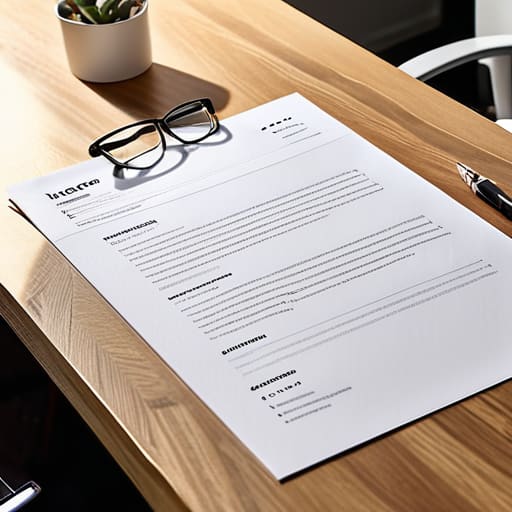
Most resumes I see from recent grads are nothing more than a laundry list of classes they took and clubs they joined. It’s a common mistake during the process of building a professional resume: you think you’re documenting your history, but you’re actually just creating a wall of text that no recruiter has the patience to climb. To cut through the noise, you need to stop treating your resume like a transcript and start treating it like a value proposition. If you can’t tell me in six seconds how you solve a problem, you’ve already lost the reader.
Focus on outcomes, not just responsibilities. Instead of saying you were “responsible for social media,” tell me you “increased engagement by 20% over three months.” This shift in perspective is vital when transitioning from academia to the workforce, where the language of “grades” is replaced by the language of “results.” I also recommend dedicating a small, clean section to your technical proficiencies and specific soft skills for entry level jobs—like project coordination or client communication—but only if you can back them up with evidence. Keep the layout minimalist. If your document looks cluttered, a hiring manager will assume your work habits are cluttered, too.
Five Ways to Stop Playing Defense and Start Playing Offense
- Stop applying to everything. It’s a recipe for burnout and a diluted resume. Pick five companies that actually align with your trajectory and tailor every single interaction to them. Quality beats volume every single time.
- Automate your job alerts, but manualize your networking. Let the software find the openings, but don’t expect an algorithm to get you an interview. Reach out to alumni on LinkedIn with a brief, specific note. A real connection beats a generic application.
- Treat your digital footprint like a professional asset, not a personal diary. If a recruiter Googles you, they shouldn’t find a chaotic mess. Clean up the social noise and make sure your LinkedIn profile is the most polished version of your professional self.
- Build a “Proof of Work” folder. Don’t just tell me you know how to use Excel or Python; show me a project where you actually solved a problem. Whether it’s a class project or a side hustle, tangible evidence beats a list of buzzwords on a PDF.
- Master the art of the follow-up. Most students drop the ball the moment they hit ‘send.’ A polite, structured follow-up email 48 hours after an interview isn’t annoying—it’s professional. It shows you actually care about the outcome.
## On the Illusion of Busywork
“Don’t mistake a frantic schedule for professional progress. The goal isn’t to fill every hour with ‘career prep’; it’s to build systems that make your talent visible while you reclaim your time for the things that actually teach you how to think.”
Marcus Holloway
Cut the Noise and Get to Work

Look, we’ve covered a lot of ground here. We talked about hunting for internships without letting the process drain your mental bandwidth, and we dissected how to build a resume that actually functions as a tool rather than just a list of chores. The common thread is simple: stop treating your career preparation like a chaotic scramble and start treating it like an operational system. Whether you are automating your job alerts or refining your professional narrative, the goal is to minimize friction. If a process feels like it’s eating your life without providing a clear return on investment, change the process.
At the end of the day, the job market is just another complex system, and you are the one in control of your inputs. Don’t get caught up in the performative hustle that social media loves to romanticize; that’s just noise. Focus on building a foundation of consistent, scalable habits that allow you to show up as your best self when the real opportunities arrive. You don’t need to do everything at once, you just need to start moving with intention. Grab your notebook, pick one thing we discussed, and execute. The rest will follow.
Frequently Asked Questions
How do I actually balance a heavy course load with the need to build a professional network?
Stop treating networking like a second full-time job. You don’t need endless cocktail hours; you need high-leverage touchpoints. Integrate it into your existing schedule. Reach out to one alum on LinkedIn for a fifteen-minute virtual coffee every other Tuesday—mark it in your calendar like a lecture. Use your class projects as excuses to invite professionals to review your work. It’s about strategic micro-interactions, not sacrificing your GPA for social filler.
I don't have much experience; what do I even put on a resume besides my GPA?
Look, I’ve seen thousands of resumes, and I can tell you right now: nobody cares about your GPA as much as you do. If you lack formal job titles, pivot to “functional” experience. List your class projects like they were consulting gigs. Detail the specific tools you used—Python, Excel, even specialized CAD software. Mention volunteer work or club leadership. If you solved a problem or managed a budget, that’s a result. Focus on utility, not just titles.
Is it worth spending time on LinkedIn if I'm not even in the workforce yet?
Yes, it’s worth it, but don’t fall into the trap of mindless scrolling. If you treat LinkedIn like a social media feed, you’re wasting your most valuable asset: time. Instead, treat it like a digital filing cabinet. Set up a clean profile now so your professional identity exists before you actually need it. Use it to observe how leaders in your field communicate. Build the infrastructure today so you aren’t scrambling later.
How do I know if I'm actually making progress or just spinning my wheels with applications?
If you’re sending fifty applications a week and seeing zero movement, you aren’t progressing; you’re just performing “busy work.” Real progress is measured by conversion, not volume. Are you getting more recruiter calls? Are your initial screenings turning into second rounds? If the answer is no, your input is wasted. Stop the spray-and-pray method. Pivot your energy toward refining your targeting and fixing your outreach until the data—the actual responses—shows a trend upward.