I spent most of my twenties in open-plan offices where the “ambient noise” was a toxic cocktail of ringing phones and loud-talking colleagues. I used to think I needed high-end noise-canceling headphones and a complex, curated library of Lo-Fi beats just to get through a spreadsheet. But after years of consulting and countless hours spent tinkering with analog synths, I realized most of that is just performative productivity. People spend more time searching for the perfect track than they do actually working. If you are looking for a magic pill or a way to turn heavy metal into a productivity hack, you’re wasting your time; learning how to focus with music is actually about eliminating distraction, not adding more noise to your brain.
I’m not here to sell you a subscription to a meditation app or a twenty-step ritual. I’m going to give you the distilled, no-nonsense framework I use to protect my mental bandwidth. We’re going to look at the specific types of sound that actually trigger a flow state and, more importantly, when you should probably just turn the damn thing off. Let’s get to the utility.
Table of Contents
The Impact of Lyrics on Concentration

Here is the reality: your brain isn’t a hard drive that can run two high-bandwidth processes simultaneously. When you try to parse a complex spreadsheet while a vocalist is belting out a bridge in your ear, you’re creating cognitive friction. This is the fundamental impact of lyrics on concentration—your language processing center is being hijacked. Even if you think you’re “tuning it out,” your subconscious is still working to decode those words, which effectively steals bits of your mental bandwidth away from the task at hand.
If your work requires heavy linguistic lifting—like writing a report or drafting an email—lyrics are your enemy. In these moments, I suggest pivoting toward something more structural. I often find that lofi hip hop for studying or similar instrumental tracks provide a steady rhythmic pulse without the verbal interference. You want a soundscape that sits in the background, not one that demands a seat at the table. If the words start competing with your thoughts, you aren’t working; you’re just managing a distraction.
Lo Fi Hip Hop for Studying Without the Friction

If you’ve spent any time in a modern co-working space or a noisy cafe, you know that the biggest enemy of progress isn’t hard work—it’s unpredictable distraction. This is where lofi hip hop for studying becomes a legitimate utility rather than just a trend. The beauty of the genre lies in its predictability. It offers a consistent, rhythmic pulse that sits just below your conscious awareness, providing enough structure to keep your brain from wandering without demanding your attention.
I often tell my clients that the goal isn’t to be entertained; it’s to create a sonic barrier. Unlike complex orchestral pieces that might trigger an emotional response, lo-fi stays neutral. It functions much like ambient noise for deep work, smoothing out the jagged edges of a chaotic environment. By utilizing these steady, low-fidelity beats, you aren’t just listening to music; you are essentially automating your focus. You’re setting a baseline of sound that allows your mind to settle into a flow state, making the transition from “starting a task” to “executing a task” significantly less friction-heavy.
Five Ways to Use Sound Without Breaking Your Flow
- Stick to a single, long-form playlist. The last thing you need when you’re finally in the zone is a sudden genre shift or a jarring transition that pulls you out of your mental headspace.
- Treat music as background noise, not a performance. If you find yourself actively listening to the melody or analyzing the production, you aren’t working; you’re just distracted by a different kind of noise.
- Use familiar tracks for repetitive tasks. If you’re doing data entry or something mindless, play an album you’ve heard a thousand times. Since your brain already knows what’s coming, it won’t waste energy processing new information.
- Control your volume strictly. Keep it at a level where it masks ambient office or household noise, but doesn’t demand your attention. It should be a layer of insulation, not a spotlight.
- Curate your “Deep Work” library in advance. Don’t spend twenty minutes scrolling through Spotify when you should be tackling your most important task. Build your go-to focus sets on Sunday so they’re ready to go when Monday hits.
The Utility of Sound
Music shouldn’t be another thing you have to manage; it should be the invisible scaffolding that holds your concentration in place while you do the actual work.
Marcus Holloway
Cutting Through the Noise
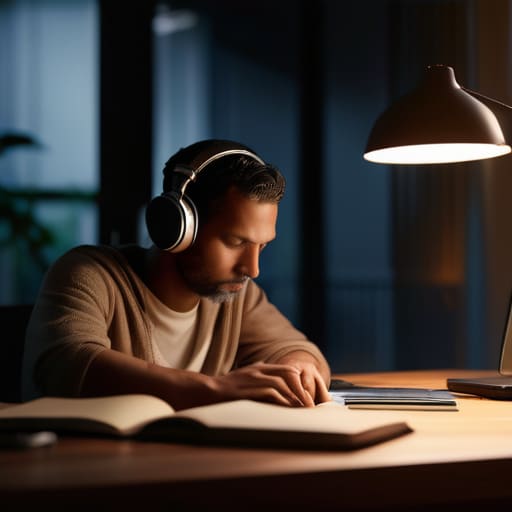
At the end of the day, using music for focus isn’t about finding the perfect song; it’s about removing the variables that derail your momentum. We’ve looked at why lyrics are often your biggest enemy when you need to dive deep, and why low-friction genres like lo-fi are your best allies for maintaining a steady state. The goal isn’t to create a concert in your headphones, but to build an auditory shield that keeps the world at bay. Stop overthinking the genre and start testing what actually works for your specific workflow. If a track pulls your attention away from the task at hand, kill it immediately.
I spent years in corporate offices where the noise was constant and the distractions were endless. I learned the hard way that you can’t control your environment, but you can absolutely control your internal response to it. Use these tools to automate your focus and reclaim your mental bandwidth. Don’t let a poorly chosen playlist become another source of friction in your day. Pick your sound, set your intention, and get back to the work that actually moves the needle. The rest is just noise.
Frequently Asked Questions
Is there a specific volume level that works best for blocking out office chatter without causing ear fatigue?
There’s no magic number, but there is a sweet spot. You want “ambient presence,” not a private concert. Aim for about 50 to 60 decibels—roughly the level of a quiet conversation. If you can still hear your own thoughts without straining, you’re golden. If you find yourself leaning into the sound or feeling a dull pressure in your temples, turn it down. Protect your ears; ear fatigue is just another form of mental friction.
Should I switch genres when I move from deep analytical work to more administrative tasks?
Yes. Don’t treat your focus like a static setting. When you’re deep in analytical work, you need a sonic shield—something minimal, like ambient or classical, to keep the prefrontal cortex from getting hijacked. But when you transition to administrative tasks, you can afford a bit more “texture.” Switch to something with a steady tempo, like house or upbeat jazz. It keeps the momentum up without the cognitive drag of heavy lyrics. Match the sound to the task.
How do I prevent the music itself from becoming a distraction once the novelty wears off?
The moment you start “listening” to the music rather than working through it, you’ve failed. To prevent novelty from turning into a distraction, you need to build a library of predictable, repetitive sounds. I use the same three ambient albums or specific synth loops for weeks at a time. Once the brain recognizes the pattern, it stops processing the audio as new information and starts treating it as background noise—exactly where it belongs.
Are noise-canceling headphones actually better than open-back ones for maintaining a flow state?
It depends on your environment, not the specs. If you’re working in a loud cafe or a home with constant distractions, noise-canceling headphones are non-negotiable; they eliminate the external friction that breaks your flow. However, if you have a controlled, quiet space, open-back headphones offer a more natural soundstage that prevents that “clamped” feeling. My rule of thumb: use noise-canceling to shut the world out, and open-back to stay immersed without the fatigue.